Custom dashboard
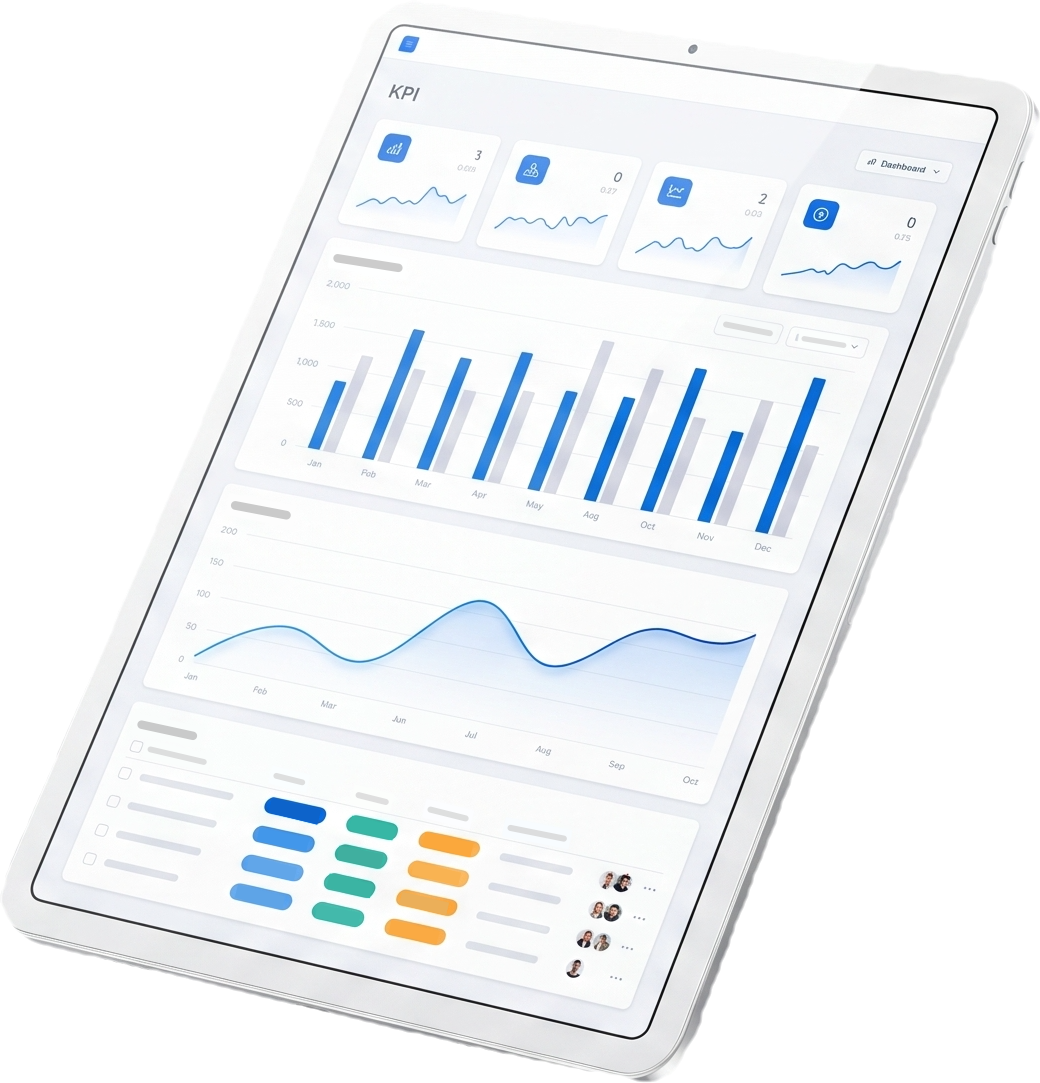
The numbers you check every week, in a web dashboard that updates itself from your spreadsheets, your ERP or other sources.
- Typical timeline
- 2 to 4 weeks
- Price
- Fixed price, agreed before we start
What it solves
Reports are put together by hand from several files, they arrive late and everyone has their own version. Deciding what to restock or where margin is slipping depends on someone having time to cross-check the data.
What’s included
- A connection to one or two data sources: your spreadsheets, your ERP, a database or an API.
- The metrics and charts we agree on before starting, no more and no less.
- Automatic updates, with no copying and pasting.
- Username and password access for the people you choose.
- Export to Excel for anyone who still needs it.
- Code in your repository, accounts in your name and documentation so that anyone can maintain it.
How it works
Intro call
You tell me which decisions you make with those numbers and where they come from today.
Fixed proposal
You get, in writing, which metrics the dashboard will show, which sources they come from, the price and the delivery date.
Build
Every week I tell you in writing what’s done, and as soon as there’s something to see, you try it with your own data.
Delivery
The dashboard is up and running and documented, with 30 days of support to fine-tune whatever needs it.
Frequently asked questions
Why not just use Power BI?
If Power BI works for you, I’ll tell you on the first call. A custom dashboard makes sense when you want something simple for the whole team, with no per-user licenses, or something that also lets people correct data or trigger actions.
How much does it cost to run each month?
It depends on where it’s hosted and which services it uses. Before you sign, I tell you the total monthly cost, so there are no surprises.
Will it work with my current spreadsheets or ERP?
Yes. Your team keeps its spreadsheets and its ERP; what goes away is the retyping. I connect to what you already use, through import and export files or the ERP’s API, and before proposing anything I check whether your software already has a feature that solves it.
What happens after delivery?
You get 30 days of support to fix bugs and fine-tune details. After that there’s an optional monthly maintenance plan. If you’d rather not, you keep everything documented so whoever you choose can maintain it.
Who owns the code?
You do. It lives in your company’s repository, and the accounts for the services it uses (hosting, domain, APIs) are in your name. No lock-in: you can keep working with me, with someone else or with your own team.
Other services

Process audit
Before investing in a project, find out what’s actually worth automating. You get a plan with three prioritized proposals, each with scope, timeline and price.
Process automation
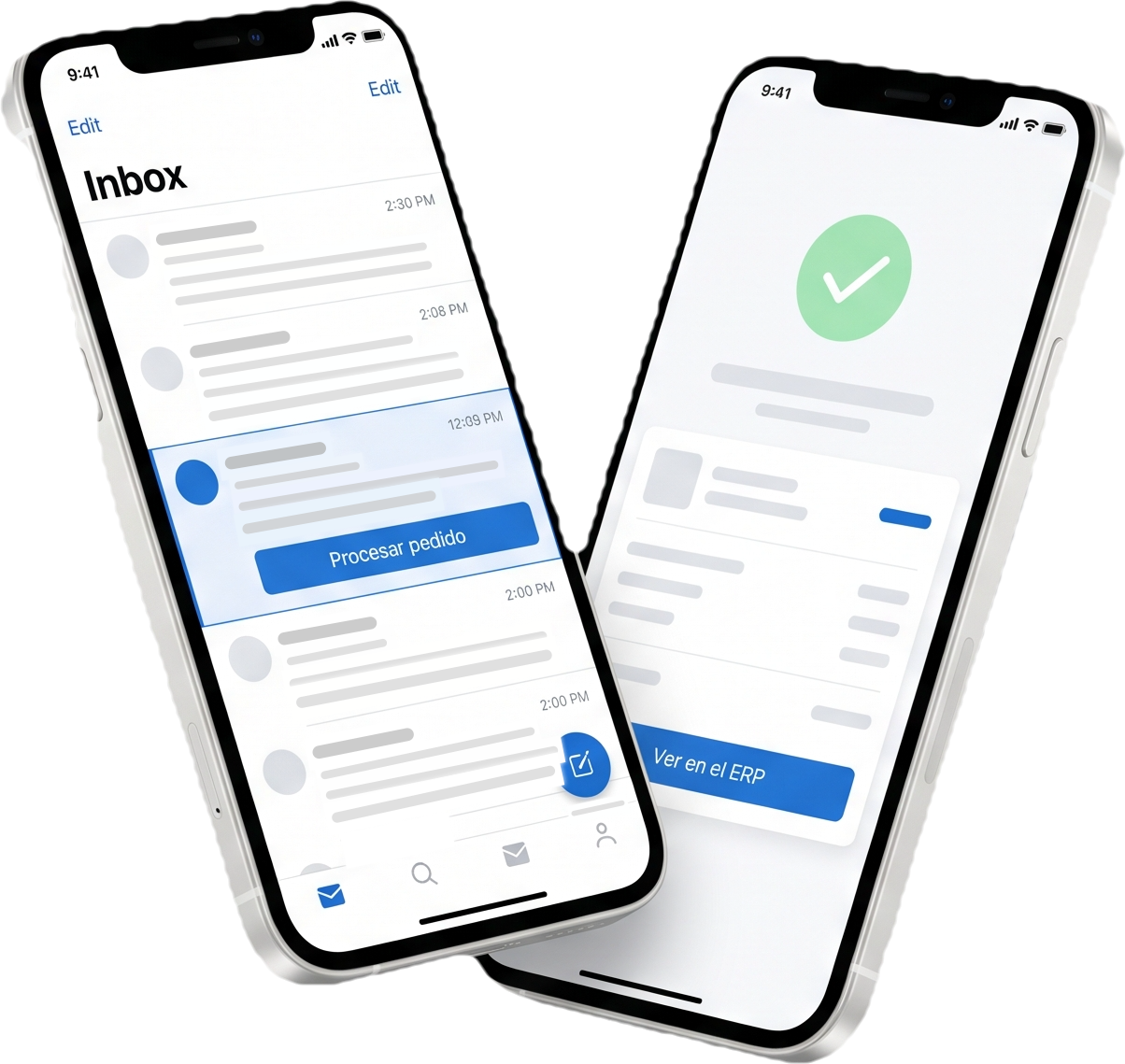
A process that’s done by hand today, such as entering emailed orders into your ERP, running on its own, with human review wherever it’s needed.
Is this what you need?
Tell me about it in a 20-minute call, and I’ll tell you whether it makes sense and how I’d approach it.